About not being a student anymore

Posted in allgemein by thomas on the May 11th, 2012

In about two hours my graduation ceremony starts. That means myself in a suit, a lot of other people in suits, my family coming to Vienna from the countryside, some speeches and a fancy certificate of my academic prowess. Master of arts. Right …

I also quit at LHBS with the beginning of the month. I was the first employee there and I guess I grew with the company. I learned a lot at LHBS. It was a great and special time, from getting the opportunity to do stuff to asking a friend like Neil over to do an Uncomfortable Talk for the company I work for. Then of course, I still had to finish my master thesis in communications and bachelor thesis in business. It wasn’t always easy to get that together, especially not if you hate trade-offs. I’m very thankful Stefan and Joanna put up with my schedule and me taking longer than I expected with the theses.

Now if I think back, in the last 5 years, before I finished university, I have been lucky enough to work on pretty much everything from global brands to medium sized regional companies to start ups and people with crazy ideas. I wrote about how I moved from web design to online marketing to an internship in planning at DDB in Budapest to the last two years at the independent brand strategy and innovation agency LHBS before, but all that never felt like much of a decision to make. It always felt logical or natural. I was always a student, not halfway there, and whatever I did, I did with the goal of finishing my research and thesis in mind. That doesn’t mean I didn’t think about what I was doing, but technically I was always a student, living his live in Vienna and about to finish. I could’ve quit my program a few times when people asked to come to a certain city to work with them or do a PHD in Vancouver. I never did. I told myself I was a student. I was in Vienna. I wanted to finish this. What a nice excuse, (eh?).

Now all this ‘I’m still a student’ talk ends. I’m not a student anymore. If I am realistic, I really haven’t been a student for quite a while. I remember Paul, someone I’d consider my mentor and one of my professors at the UBC in Vancouver telling me once how I’d have to stop calling myself a student. “You’re a young planner. You might still be studying, but you’re not a student.” – That was in 2009.

It was a special time, it was a great excuse and I still have a hard time to explain to people that while I am technically a grad, I have worked on stuff for quite a while.

So now on to that growing up thing. Starting with a trip around China and Singapore.

Frustration and Joy

Posted in allgemein by thomas on the April 18th, 2012

Two weeks ago, I was sitting at the exact same spot: On the couch in our living room, feet at the table, laptop on, well, my lap and extremely frustrated.

I was about to write a blog post about how I am done with tennis, the sport I have been doing for 18 years. I was about to write how frustrating it is to try to play at a higher level than the one I am able to play now – to expect that level of myself. How annoying it is to not be as fast as I used to be – or fast at all. How frustrating it is not to be able to trust my own body enough to take him through two or even three intensive sets of training a week. How ridiculous it feels to be out of breath after only 15 minutes of sparring. How sad it is to even spend time on it – time I could use doing other things. I would have written about how I have been telling myself the last 8 years in fall that I want to do a proper preparation next season. How I will hold through the next season without injury and how I still imagine how fucking awesome it will be when I am able to play up to my limits.

That night, I was just coming home from two hours of playing with my brother and I had all that feelings at once. It is April, the season is coming up, I’ll be playing the 3 (down from 2 and 1 the years before), I’m underprepared and – for playing the tennis I want to play – overweight. I was standing there and had the feeling like I was wasting my brother’s time.

Today, I am sitting here again, coming home from two hours of tennis for the first time on clay this year. I am still not prepared and I obviously won’t be in two weeks when the season starts. But I am happy. I am exhausted, my feet hurt, so does my right shoulder, but it was fun. I tried as hard as I could to be quick on my feet. I almost broke down on the court once after some longer rallies. I tried hard to play for control, not for beauty. I managed not to be stupid, throw the racket all over the place and make my brother feel ashamed for myself. That feeling, when the ball hits the line on a longline winner after a long rally. When it lands exactly where you wanted it, not a bit shorter or longer. That feeling when you sprint to reach a dropshot and convert it into a winner. That little swagger you get when you slowly feel your legs coming back under you. It’s just beautiful. And I don’t want to miss it.

Spring

Posted in allgemein by thomas on the April 4th, 2012


Vienna, the corner where Neubaugasse meets Mariahilfer Straße.

He is walking down the road walking his fixie bike with his right hand. He flows through the stream of shopping, smiling, chatting people. Easily he walks through, with a spring in his step. It was spring. With his brown leather shoes, his blue trousers, the colorful shirt and the black headphones – he was Spring. His bike fit. Violet, pink and brown leather seat, thin like him. The drums and guitars he hears.

A young couple is standing a few meters in front of him. The man notices him. Examines him. Bike, guy, bike, buy. Up and down. Dismissive. ‘Spring’ walks past them. Did he notice them? The man nudges his girlfriend. Says ‘look’. As if his girlfriend hadn’t noticed. She did.

He moves on. Still pushing his bike. A group of girls is passing by. They giggle, smile, the first one in the group sees him first. Eyes down, eyes up. All smiles. Eyes light up. Giggles. Not dismissive. He walks by.

Then he stops. A hug, a kiss, and another kiss.

Say hello to and please support Marica

Posted in allgemein by thomas on the April 3rd, 2012


Only recently, when I graduated, I pondered for a moment how many great people I have met over the course of my too many years at university. (Yes, I met some idiots as well, you kind of do when you study media and business, but let’s not go there.)

One of the people I met, who firmly resides on the light side of the force, is Marica, and while we haven’t been in touch as much as we should, I recently noted that she’s going to do something that takes a lot of heart and also involves blood, sweat and tears. Ok, so I am not sure about the blood and tears part, but heart and sweat surely. When I read what she’s doing I sent her a few questions and thought why not share it on here.

Who are you and when did we meet? [I didn't ask that because I forgot, but for you, dear reader]

Me? I’m Marica Rizzo from Vancouver, BC Canada. We met in COMM263 Consumer Behavior when we did a group project together!

What is it that you participate in for charity?

This year I’m riding my bike from Vancouver to Seattle – just over 150km! The Ride to Conquer Cancer benefits the BC Cancer Foundation – an incredible organization funding and participating in research to cure cancer and support patients and their families. My fundraising goal this year is to raise $2500. I’m so blown away by the support I’ve received so far from friends and family. It’s amazing and I’m so grateful. I hit my 50% mark this week – so I’m half way there with about 2 months left before the ride.

Why did you decide to take part?

Cancer affects everyone. My friend growing up battled lukemia when we were 12 years old – that was my first experience with cancer. She is a survivor and an incredible girl! This past year, has also been incredibly overwhelming. Three people close to me were diagnosed and my friend lost a parent to cancer. I felt like this was the year to commit to doing something about it and taking what action I could. I’m not a researcher, I don’t have a medical background, so this is my way of supporting the people who have dedicated their lives to saving others.

What’s the longest distance you ever biked before this?

Haha…oh man, maybe 40km? I biked from Vancouver to Horseshoe Bay once, but took the bus back…I have a lot of training to do. The weather is nice in Vancouver again so I’ll be back on the bike this weekend.

What is your biggest dream?

I have so many…this is a hard one! I’m a big fan of sports. Not just watching professional sports, but participating and specifically of the incredible (and applicable) lessons from sport you can apply to life. One of my dreams is to make participating in sports accessible to all kids and to use sport as a platform for connecting to other kids around the world – I love kids.

What are you doing to make it real?

Gotta start somewhere. Right now I am volunteering as a coach with a Special Olympics swim team in my hometown. I’m learning what sport means to different people and how it is a part of their lives. I have been on many teams in my life, but I can honestly say this is the most incredible team I have ever been on. The most supportive and exemplary of sportsmanship and blending competition with a supportive environment.

Well, now you know Marica. I think what she does is pretty amazing.

Click here to visit her personal page for the charity.

She’s @maricarizzo on twitter if you want to say hi.

Master exam time – my reading list as a MA student

Posted in allgemein by thomas on the March 1st, 2012

It’s been a while since I last updated my blog, so hello everybody.
As some of you may know, I handed in my master thesis in November and have started working full time as a strategist at LHBS, after having worked there ever since it started, but not at full capacity because of … well … university.

Now it’s really time to say goodbye to university in a last push through my exam. The way things work here, you have two professors asking about two different subjects. I could chose the topics and literature myself, as long as I was able to hold my ground on it.

My fist topic is advertising research. Here’s the literature list for it. Mind you, some of this is German.

1 My Thesis (epistemological interest, state of research, research strategy)
My topic was the German version of
“Social Media and the Corporate Cool Machine. The use of brand-related media content and its meaning in the context of new communicative practices and spaces.” (Fancy, eh?)

2 Theories of Advertising Research
2.1 Perspectives of Communication Theory (German)

2.2 Theoretical Discussion (Information vs. meaning, persuasion vs. emotion, individual vs. groups)

  • Petty, R.E. & Cacioppo, J.T., 1986. Communication and persuasion: Central and peripheral routes to attitude change, Springer-Verlag New York.
  • Heath, R. & Feldwick, P., 2008. Fifty years using the wrong model of advertising. International Journal of Market Research, 50(1), p.29.
  • McCracken, G., 1987. Advertising: Meaning or information. Advances in Consumer Research, 14 (1), pp.121–124.
  • Mick, D.G. & Buhl, C., 1992. A meaning-based model of advertising experiences. Journal of Consumer Research, 19(3), pp.317–338.
  • Vakratsas, D. & Ambler, T., 1999. How advertising works: what do we really know? Journal of Marketing, 63(1), pp.26–43.
  • Earls, M., 2003. Advertising to the herd: how understanding our true nature challenges the ways we think about advertising and market research. International Journal of Market Research, 45(3), pp. 311–336.

2.3 One additional theory: Advertising and agenda setting/salience (this is what’s behind “How Brands Grow” by Sharp)

  • Sutherland, M. & Galloway, J., 1981. Role of advertising: Persuasion or agenda setting. Journal of Advertising Research, 21(5), S. 25–29.
  • Ghorpade, S., 1986. Agenda setting: a test of advertising’s neglected function. Journal of Advertising Research, 26(4), S. 23–27.
  • Ehrenberg, A., 1974. Repetitive Advertising and the Consumer. Journal of Advertising Research, 14(2), pp.24–34.
  • Ehrenberg, A., Barnard, N. & Scriven, J., 1997. Differentiation or salience. Journal of Advertising Research, 37(6), pp.7–14.
  • Ehrenberg, A. et al., 2002. Brand advertising as creative publicity. Journal of Advertising Research, 42(4), pp.7–18.
  • Romaniuk, J. & Sharp, B., 2003. Measuring brand perceptions: Testing quantity and quality. Journal of Targeting, Measurement and Analysis for Marketing, 11(3), S. 218–229.
  • Romaniuk, J. & Sharp, B., 2004. Conceptualizing and measuring brand salience. Marketing Theory, 4(4), S. 327–342.
  • Sharp, B., 2010. Ehrenberg’s View of Advertising. Journal of Advertising Research, 50(4), pp. 352-353.

3 Methods and results of advertising research
3.1 Measuring success
3.1.1 About effects and success

  • Tropp, J., 2004. Markenmanagement: Der Brand Management Navigator. Markenführung im Kommunikationszeitalter, VS Verlag. (Brand Management in the Communication Age.)
  • Zurstiege, G., 2007. Werbeforschung 1st ed., Utb.
  • Rossiter, J.R. & Bellman, S., 2005. Marketing communications: theory and applications, Prentice Hall. Kapitel ‘Campaign Tracking’: S. 312-343

Depending on the theory, success is interpreted differently:
3.1.2 Individual

  • Schweiger, G. & Schrattenecker, G., 2009. Werbung 7. Aufl., UTB, Stuttgart. Kapitel: ‘Messung der Kommunikationswirkung’, S. 338-376 (this is standard ad testing / research)

3.1.3 Group (a bit of @herdmeister)

  • Bentley, A. & Earls, M., 2008. Forget influentials, herd-like copying is how brands spread. Admap, 43(499), S. 19-22.
  • Bentley, A., Earls, M., O’Brien, M.J. & Maeda, J., 2011. I’ll Have What She’s Having: Mapping Social Behavior, MIT Press.
  • Kearon, J., Earls, M., 2009. Me-to-We Research-From asking unreliable witnesses about themselves to asking people what they notice, believe and predict about others. In ESOMAR Congress. http://www.brainjuicer.com/xtra/Me-to-We_Research_-_ESOMAR_Congress_2009.pdf

3.1.4 Results
Effectiveness:

  • Binet, L. & Field, P., 2009. Empirical generalizations about advertising campaign success. Journal of Advertising Research, 49(2), pp.383–94.

Creativity and Effects:

  • Smith, R.E. & Yang, X., 2004. Toward a general theory of creativity in advertising: Examining the role of divergence. Marketing Theory, 4(1-2), p.31.
  • Smith, R.E., Chen, J. & Yang, X., 2008. The Impact of Advertising Creativity on the Hierarchy of Effects. Journal of Advertising, 37(4), pp.47–62.
  • Smith, R.E. et al., 2007. Modeling the determinants and effects of creativity in advertising. Marketing Science, 26(6), pp.819–833.

3.1.5 Another method: Low-Attention Processing

  • Heath, R. & Nairn, A., 2005. Measuring affective advertising: Implications of low attention processing on recall. Journal of Advertising Research, 45(2), 269.
  • Heath, R., Brandt, D. & Nairn, A., 2006. Brand relationships: Strengthened by emotion, weakened by attention. Journal of Advertising Research, 46(4), p.410.
  • Heath, R., 2009. Emotional engagement: How television builds big brands at low attention. Journal of advertising research, 49(1).

4 Social uses of advertising

  • Lannon, J. & Cooper, P., 1983. Humanistic advertising: a holistic cultural perspective.
  • Buttle, F., 1991. What do people do with advertising. International Journal of Advertising, 10(2), S. 95–110.
  • O’Donohoe, S., 1994. Advertising uses and gratifications. European Journal of Marketing, 28(8/9), S. 52–75.
  • O’Donohoe, S. & Tynan, C., 1998. Beyond sophistication: dimensions of advertising literacy. International Journal of Advertising, 17, S. 467–482.
  • Ritson, M. & Elliott, R., 1999. The social uses of advertising: an ethnographic study of adolescent advertising audiences. Journal of Consumer Research, 26(3), pp.260–277.
  • Mitchell, V., Macklin, J.E. & Paxman, J., 2007. Social uses of advertising: an example of young male adults. International Journal of Advertising, 26(2), S. 199.

And then there’s my second topic:

Media and communication theory and methotodology.

1. Identity theory

  • Keupp, H. u. a., 1999. Identitätskonstruktionen: Das Patchwork der Identitäten in der Spätmoderne 4. Aufl., rororo.

2. Media ethnography

  • Bachmann, G. & Wittel, A., 2006. Medienethnographie. In J. Bergmann & R. Ayaß, hrsg. Qualitative Methoden der Medienforschung. Hamburg: Rowohlt Taschenbuch Verlag.
  • Bergmann, J., 2008. Medienethnographie. In U. Sander, F. von Gross, & K.-U. Hugger, hrsg. Handbuch Medienpädagogik. Vs Verlag, , S. 328–334.
  • Bergmann, J., 2006. Qualitative Methoden der Medienforschung – Einleitung und Rahmung. In Qualitative Methoden der Medienforschung. Rowohlt, , S. 13–41.
  • Blumer, H., 1956. Sociological Analysis and the „Variable“. American sociological review, 21(6), S. 683–690.
  • Charmaz, K., 2006. Constructing grounded theory: a practical guide through qualitative analysis, SAGE.
  • Flick, U., 2007. Qualitative Sozialforschung: Eine Einführung 3. Aufl., rororo.

3. Symbolic Interactionism

  • Elliott, R. & Wattanasuwan, K., 1998. Brand as symbolic resources for the construction of identity. International Journal of Advertising, 17(2), S. 131–144.
  • Mead, G.H., 1967. Mind, self, and society: from the standpoint of a social behaviorist, University of Chicago Press.

4. Advertising as a system

5. Consumer Culture Theory

  • Arnould, E.J. & Thompson, C.J., 2005. Consumer culture theory (CCT): Twenty years of research. Journal of Consumer Research: An Interdisciplinary Quarterly, 31(4), S. 868–882.
  • Holt, D.B., 2002. Why do brands cause trouble? A dialectical theory of consumer culture and branding. Journal of Consumer Research, 29(1), S. 70–90.

‘Get rid of whoever was part of the system’ means get rid of the whole population

Posted in allgemein by thomas on the September 8th, 2011
If we say, ‘Get rid of whoever was part of the system,’ we would have to get rid of the whole population,” he said.

Same is true for every totalitarian system. And democracy …

Gone Interrail-ing

Posted in allgemein by thomas on the August 4th, 2011

train signal

(I’ve always been in love with the English way of making nouns out of verbs.)

So I’m off for the next couple of weeks to travel south, across Serbia and Bulgaria to Istanbul and then back up via Greece, Macedonia, the Kosovo, Montenegro, Croatia and hopefully Bosnia-Hercegovina. I’ve been to none of the cities on this trip before, so I’m excited. Starting today at 8pm in Vienna with a night train to Belgrade.

Darren Robson, great football giveaway

Posted in allgemein by thomas on the October 19th, 2010

Mein “Schema” zu Marken, Werbung und Kommunikation.

Nun gibt es ja wissenschaftlich gesehen so etwas wie einen “Information Overload” bei Menschen nicht. Bewusst verarbeiten können wir nur einen Bruchteil dessen was rund um uns geschieht und der Rest überflutet unser “bewusstes Hirn” nicht, sondern wird einfach nicht verarbeitet. Soweit so gut.

Trotzdem kommt es mir manchmal so vor, als würde mein Hirn seit ich Blogs lese noch mehr Zeit damit verbringen, die verschiedenen Einflüsse aus verschiedenen Richtungen zu verarbeiten und zu schematisieren. Dazu kommen die Einflüsse aus meinen zwei Studien, die den Theorien-Salat nur noch verschlimmern. Die Publizistik- und Kommunikationswissenschaft ist ja in sich ein chaotischer Haufen verschiedener Ansätze (Psychologie, Soziologie, Anthropologie, …) und die Betriebswirtschaftslehre mit ihren Modellen, Akronymen und sonstigen Prozessen liebt es ohnehin eine Perspektive lehrbuchgerecht zu verpacken und als einzige Wahrheit zu verkaufen. Darum auch Betriebswirtschaftslehre und nicht Betriebswirtschaftswissenschaft, aber das ist eine andere Geschichte.

Worauf will ich hinaus? Schon seit längerer Zeit sauge ich die Gedanken von Russell Davies, David Armano, Martin Oetting, Faris Yakob, Simon Law, dem Frogblog, dem Adaptive Path Blog, dem Digital Design Blog, Tim Keil, den Werbebloggern, Grant McCracken, dem Northern Planner und vielen mehr auf. Dazu kam im Studium dann Literatur á la Luhmann, Luckmann, Krugmann, Popper, Lazarsfeld, Holt, Blumler, Katz, Blumer, Schmidt und wie sie alle heißen. Und daneben klassische Lehrbuchgrundlagen aus internationalem Marketing und Marktforschung. Will heißen: Chaos.
Light chaos

Was also tun? Glücklicherweise hatte ich in der Publizistik- und Kommunikationswissenschaft die Gelegenheit durch das Schreiben zweier Bakkalaureatsarbeiten das Chaos ein wenig zu ordnen. Die erste – im Nachhinein völlig oberflächliche Arbeit – behandelte die “Online-Kommunikation bei der Markteinführung von High-Involvement Produkten”. Wie man schon am Titel erahnen kann habe ich darin so ziemlich alles zusammengewürfelt was mich zu diesem Zeitpunkt beschäftigte: Online-Kommunikation, Markteinführungen, Involvement-Forschung. Auf 40 Seiten ist das Thema natürlich unmöglich erschöpfend darzulegen. Aber: Ich konnte zumindest meine Gedanken ordnen, mir eine Theorie zurechtlegen.

Ein Jahr später hieß es dann “Virale Werbung“. Inspiriert von Martin Oettings kritischen Betrachtungen “viraler Werbefilmchen” einerseits und “Cadbury’s Gorilla” andererseits wollte ich mich mit viraler Werbung beschäftigen. Dabei ging es mir weniger um “Virale Werbung” als Neuheit, sondern eher eher um “virale Werbung”, im Sinne von “viral genützter Werbung” (Faris Yakob schreibt das viel schöner als ich). Mir ging es darum zu verstehen, welche Schemata eigentlich in der Kommunikationspraxis verbreitet sind und was man aus meinem geliebten Studium eigentlich an Theorien dafür verwenden kann, um das Phänomen zu verstehen. Wieder war die Arbeit eigentlich zu breit angelegt: die Betrachtung von Rezeption, Nutzung und Wirkung verlangt mindestens nach einer Diplomarbeit. Aber, einmal mehr konnte ich meine Gedanken ordnen, Literatur bewusster durcharbeiten, versuchen mir meine eigene Theorie zu schaffen.

Darüber wie ich über Kommunikation und Medien denke hat sich so im Laufe der Zeit ein relativ explizites Schema herausgebildet. Mit vielen Fragezeichen natürlich – vor allem was den kulturellen und inhaltlichen Teil betrifft, aber immerhin. Was Marken betrifft ist das Nachdenken darüber immer nebenbei mitgelaufen und nie explizit in meine Arbeiten eingeflossen. Man liest halt Dinge zu Sozialkonstruktivismus, Cultural Studies oder Neoropsychologie und legt es dann selbst irgendwie auf das Thema um. Mit weiteren Fragezeichen.

question mark ?

Wie sieht es also aus, mein Schema? Vereinfacht und unter der Berücksichtigung, dass die Phänomene natürlich miteinander verknüpft sind, in etwa so:

Mikro-Phänomene
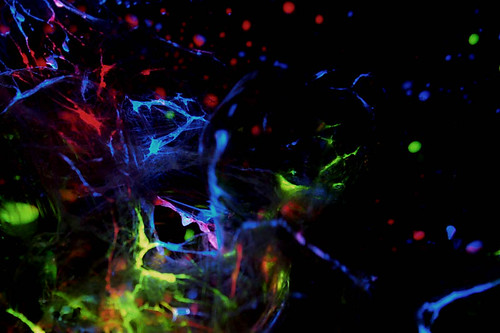
Hyperactive Neuron Network 1
In den meisten klassischen Marketing- und Werbelehrbüchern findet man immer noch fast ausschließlich das Gerede von der Veränderung von Dingen in mehr oder weniger unschuldigen Gehirnen:

Mitteilung raus, Mitteilung rein, Verarbeitung und Wirkung.

Watzlawick und andere Vertreter des Konstruktivismus lehren uns allerdings, dass das so einfach nicht ist, weil wir “die Welt” erst in uns erschaffen, den Dingen also Bedeutung zuweisen. McCracken zeigt zum Beispiel wunderbar, dass Werbung auf Bedeutungen und keine reinen Informationen sind. Watzlawick zeigt in seiner Arbeit, dass Kommunikation viel mehr ist als die übermittelte Information. Es kommt also auch und oft viel darauf an wie man etwas sagt als was man sagt.

Und zum Thema Verarbeitung und Wirkung schreibt Herbert E. Krugman schon 1965, dass die Stärke der TV-Werbung genau darin liegt, dass sie eben nicht angemessen verarbeitet wird.

Robert Heath and Paul Feldwick verarbeiten den gesamten Komplex wunderbar in ihrem Artikel über “50 Years using the wrong model of TV advertising”.

Betrifft:

  • Die gesamte Marktforschung (Brand Recognition, Brand Recall, Brand Image)
  • Produktentwicklung und -design
  • Marken als Erlebnis/Erfahrung
  • “Tone of Voice”

Literatur:

  • Konstruktivismus (Paul Watzlawick, Siegfried J. Schmidt)
  • Herber E. Krugman: The Impact of Television Advertising: Learning Without Involvement.
  • Robert Heath and Paul Feldwick: 50 Years using the wrong model of TV advertising.
  • Grant McCracken: Advertising: Meaning or Information?
  • Neuropsychologie
  • Semiotik

Soziale Phänomene

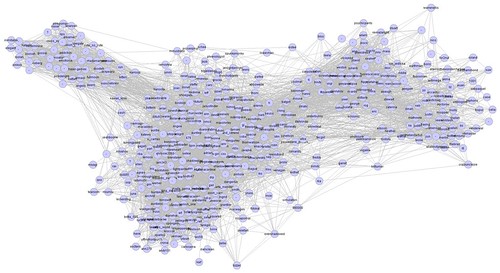
mc-50 map of FlickrLand: flickr's social network
Meinungsführer und persönliche Beeinflussung sind nicht erst seit gestern, sondern seit etwa 50 Jahren in Mode – und damit so ziemlich das einzige Modell, das es neben der “Kommunikation als Transport”-Metapher in Marketing-Bücher schafft.

Heute wird das Phänomen techologisch upgedated und breiter unter dem Thema “Social Media” abgehandelt, das Ende der Werbung - wieder einmal – prophezeiht. Die Menschen, die bisher militärisch als Zielgruppen und Verbraucher bezeichnet wurden, werden zum Partner, zum Co-Creator und allerhand mehr. Für die ganz Überzeugten heißt es Connected Marketing und bedeutet die Implementierung der interpersonellen Kommunikation in die Unternehmensstrategie, für die Werber heißt es “viral” oder “contagoius”.

Jedenfalls beschäftigt sich das Marketing plötzlich intensiver mit sozialen Phänomenen.

Heraus aus dem Hirn der Menschen und hinein in ihre Facebook-Accounts.

Egal ob man nun zu den Anhängern der reinen Lehre zählt oder nicht: Marken sind soziale Konstruktionen, wie alles andere auch. Und damit trifft auf sie alles zu, was man so über soziale Kommunikation herausgefunden hat: über sozialen Druck, über öffentliche Agenda, über das Framing von Themen und über die Diffusion von Ideen.

Betrifft:

  • die gesamte Markenführung
  • die gesellschaftliche Akzeptanz und Autorität einer Marke
  • Mediaplanung
  • Segmentierung

Literatur:

  • Meinungsführer-Forschung (Lazarsfeld, Katz, Blumler)
  • Agenda-Setting Forschung (McCombs, Shaw)
  • Sozialer Interaktionismus (Mead, Blumer)
  • Soziale Konstruktion der Wirklichkeit (Berger, Luckmann)
  • Guido Zurstiege: Werbeforschung.
  • Guido Zurstiege: Zwischen Kritik und Faszination. Was wir beobachten wie wir die Werbung beobachten, wie sie die Gesellschaft beobachtet.

Kulturelle Phänomene

Go see it!
Nike und Apple sind Ikonen unserer Kultur. Cadbury versucht gar nicht erst Werbung zu machen, die irgendwie mit Schokolade zu tun hat. Burger King dreht Dokumentationen. Jägermeister bewirbt KeinJägermeister.

Wirklich große Marken sind Teil der Kultur. Globale Marken sind Teil einer globalen Kultur. Jetzt sind natürlich auch Waschmittelmarken und ihre Werbung Kultur, so wie überhaupt alles Kultur ist.

Nike und Apple aber folgen nicht dem Zeitgeist, sondern erschaffen ihn (mit).

Große Marken bauen langfristig auf Narrationen die größer sind als sie selbst, die ihre Herkunft oft in der Geschichte der Kultur haben oder über Archetypen mit ihnen verknüpft sind. Und sie planen ein, dass Menschen nicht blöd sind, sondern die Geschichte selbst weiterspinnen und mitdenken.

Literatur:

  • Douglas B. Holt: Jack Daniel’s America.
  • Grant McCracken
  • Naomi Klein: No Logo.
  • Gunther Kress
  • Theo Van Leeuwen

My Room

Posted in allgemein by thomas on the January 11th, 2009


My Room, ursprünglich hochgeladen von wagnerthomas1

Mein Raum, mein Chaos.